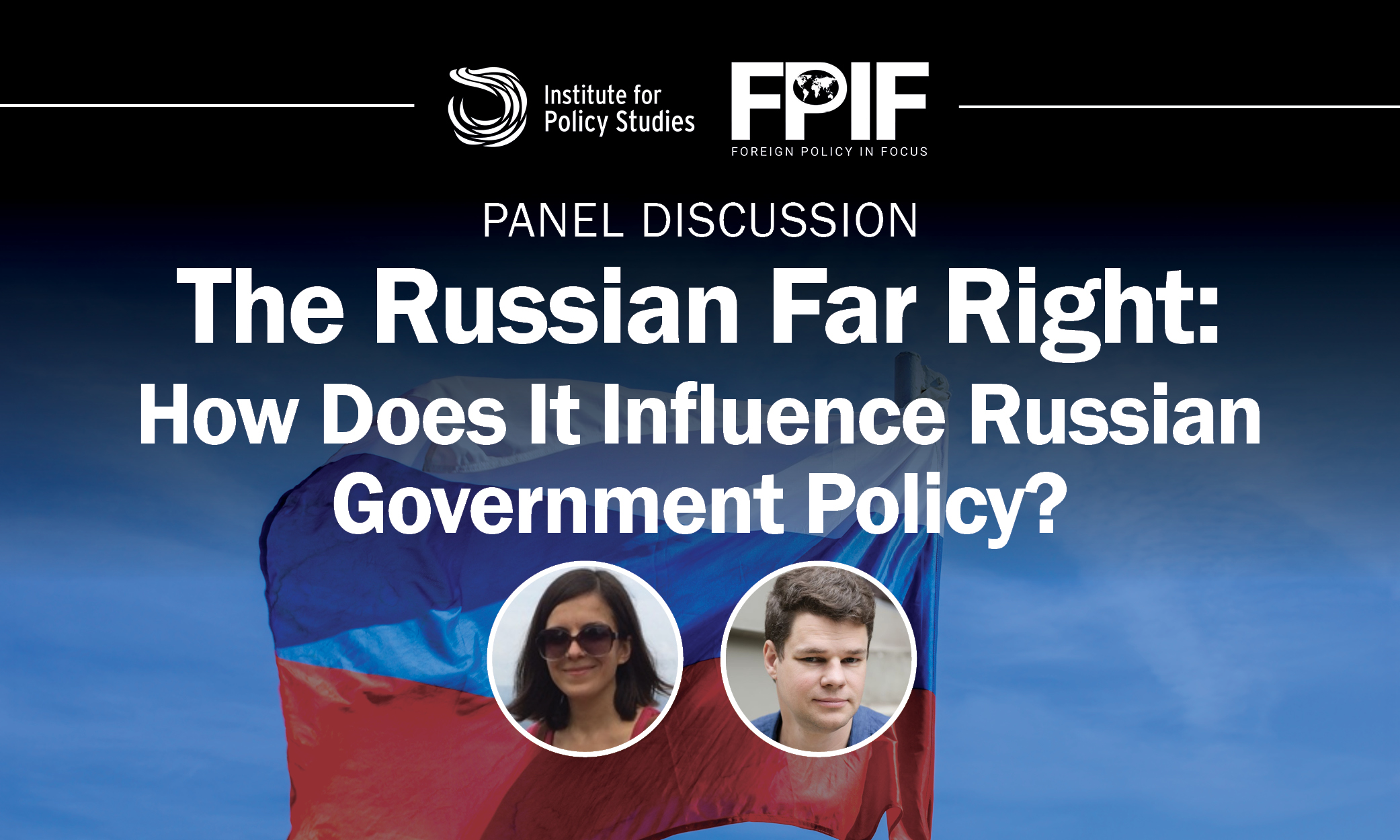
The far right has been a feature of modern Russian politics since the collapse of the Soviet Union. Under the rule of Vladimir Putin, however, it has increased its influence on government policy, particularly around the initial invasion of Ukraine in 2014. The far right has both supported the current war in Ukraine and criticized the Putin administration for not taking an even harder line against Kyiv and the West. It has exercised that influence in the blogosphere, in the military, and among high-level advisors to the Kremlin. The far right has also embedded themselves within the education system, from school curriculum initiatives to university courses that promote statist ideology. Right intellectuals openly aspire to shape future political agendas, while their real influence remains debatable.
Will the Russian far right prevent any peace deal with Ukraine? Will it exercise even greater influence over Russian foreign and domestic policy? Will it determine Russia's post-Putin future?
Alina Parker is a full-time lecturer teaching in the Writing Program and in the Russian, Eurasian, and Polish Studies Program (REPS) at UMass Amherst. She is currently focused on debates within the Russian far right. Arseniy Kumankov taught at Moscow School of Social and Economic Sciences and HSE University from 2013 to 2022. He has authored dozens of papers in both Russian and English, along with three books in Russian: War in the 21 Century, War: In Thrall to Violence, and Modern Classics of Just War Theory.