

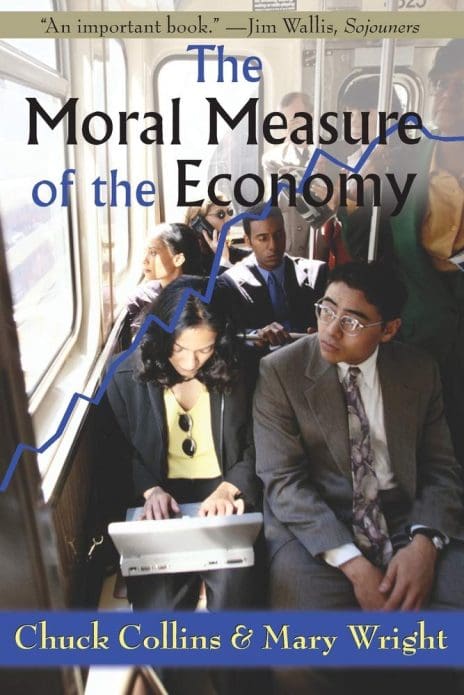
The Moral Measure of the Economy


Chuck Collins
Orbis Books, 2007
222 pages
ISBN: 9781570756931
Available in Print and eBook formats
Find a copy in your local library
“It is twenty years since the U.S. Catholic bishops issued a pastoral letter on the U.S. economy. Since then striking changes have occurred as the U.S. has become dramatically more unequal in terms of wealth, income, and opportunity. The signs are everywhere, from the fantastic salaries of corporate CEOs, the skyrocketing rates of personal and public debt, tax cuts for the wealthiest, increased job insecurity, and shrinking public services. Catholic social teaching supplies a set of criteria for evaluating the moral health of an economic system, though for most people these principles are a well-kept secret. In this clear and penetrating book, Chuck Collins and Mary Wright draw on these principles to evaluate our economy and lay out practical steps toward establishing an economy ‘as if people mattered.'”
Citation (MLA): Collins, Chuck, and Mary Wright. The Moral Measure of the Economy. Orbis Books, 2007.


