

Reflections on the Loss of My Big Sister to International Terrorists 50 Years Ago


Editor’s note: This September marks the 50th anniversary of the assassination in Washington, D.C. of Institute for Policy Studies colleagues Ronni Karpen Moffitt and Orlando Letelier by agents of Chilean dictator Augusto Pinochet. For more information about this infamous act of international terrorism — and efforts to turn this tragedy into a force for justice — see our Letelier-Moffitt Human Rights Award page.
It is incredible to me that it has been 50 years since the call I received in the morning from my father — the call that no parent could imagine ever having to make.
“Michael, we have a problem, a big problem. Ronni was killed.”
He knew very little at that time about what had happened, other than saying something about Ronni being killed with a colleague on the way to work by a bomb — and that somehow the government of Chile was involved. Those words, that event, were so incredible to me, so bizarre, that I had to be dreaming.
As it turned out, it was not a dream, but my family’s nightmare that lasted for years and that changed our family forever.
I’m not going to say much about the subsequent events, other than to say that my parents, Hilda and Murray, in the face of the most horrific event that parents could endure, were true heroes, traveling to Washington to meet with State Department officials, speaking their minds to power, never accepting “no” for an answer when the answer should have been “yes, and we are so sorry for your loss,” attending marches and protests seeking justice, and helping persuade our government to change its policy and finally helping to bring some semblance of justice (perhaps not peace for themselves) for the loss of their 25-year-old daughter when the perpetrators were finally found guilty and democracy restored to Chile — and all while they were running their deli in New Jersey.
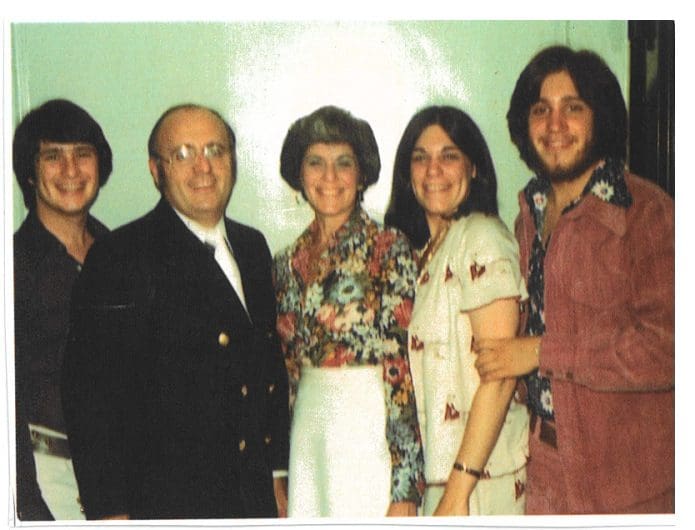
There has not been one day over these years that I haven’t thought about Ronni, and I still consider her to be my big sister. Sadly, for my family there was more than the loss of a daughter and sister that day. My parents lost grandchildren. My brother and I lost nephews and nieces. My kids lost cousins. And with my sister as a moral guide, who knows what else we all lost?
Much has of course changed in the world, good and bad, over these 50 years. My father and brother have passed but my mother, at 98, has not lost the beauty and grace that made her so special. In the Jewish religion, the highest honor that can be bestowed upon the dead is to name a child after them. There are eight people named after Ronni, including my granddaughter, Skylar Ronni Karpen.
So in the end, those people who sought to silence the fight for justice and freedom for all that Ronni fought for during her short life have only succeeded in increasing eight-fold who Ronni was and what she stood for.
Ronni was killed along with Orlando Letelier, a man who had been the Chilean foreign minister and ambassador to the United States, who was placed in prison by Pinochet because of his opposition to the dictatorship and his belief in democracy and human rights — and who might have been elected president of Chile when democracy returned to that country.
On behalf of my family, I would like to thank the Institute for Policy Studies and the folks who worked there, who for 50 years fought to make sure that Ronni’s achievements and memory were given equal respect and dignity. Through their efforts and the efforts of numerous Chileans (including one of Orlando Letelier’s children), this summer a Chilean court found three former members of Pinochet’s secret police guilty of the murder of my sister and sentenced them to prison. Whether it took a day or was delayed for 50 years, we always knew that there could never be justice for Ronni’s death. So after so many years, we are only left with accountability, which sadly must suffice.
I know after so many years there aren’t many who knew Ronni personally. In 1986, at the 10th anniversary of her death, I was asked to talk about my big sister. My hope in printing it below is that it might help folks understand or remember just how special Ronni was.
Comments from the 10th Anniversary Sheridan Circle Ceremony
Michael Karpen, September 1986
On behalf of my family, I would like to thank you for coming here today to take a few minutes out of your schedule to remember the events that took place here 10 years ago, and to reflect upon the lives of two people whose loss leaves a void that time seems unable to fill.
I have been asked to say a few words about my sister, Ronni, whom my memory of and love for cannot be diminished by the years. If you don’t mind, I would like to take the opportunity to share a few personal memories and thoughts with you.
I know that many of you knew and respected Ronni, and some loved her. Some of you knew her as a friend or a relative, some as a co-worker, and others as a political compatriot. But I knew, respected, and loved her, as no one else could. I knew her and loved her as my big sister.
It has been 10 years since I touched my sister’s hand, kissed her cheek, laughed at her dumb jokes. And I miss these things and I am angered and saddened that they were taken away from me, but I am also angered and saddened that they were taken away from you, also, and that those of you who never knew Ronni will never have the privilege to do so. But, although I can never physically touch Ronni again, not one day passes that I don’t think about her, and speak with her; that I don’t ask for, and receive, her guidance.
She is, as she always has been, my moral, ethical, and political mentor, as well as my personal guidance counselor on life. You see, she is my big sister.
Ronni was six years older than I, and as a result was often given the job of taking care of me.
When we were growing up, she was my protector. I remember when I was five or six, my brother, who is a few years older than me, would pick a fight with me, and invariably end up on top of me. All I had to do was shout Ronni’s name. No matter what she was doing, she would drop it, and in a matter of seconds, there she would be, coming to my rescue, yelling “Supergirl” and throwing my brother off of me. He never had a chance.
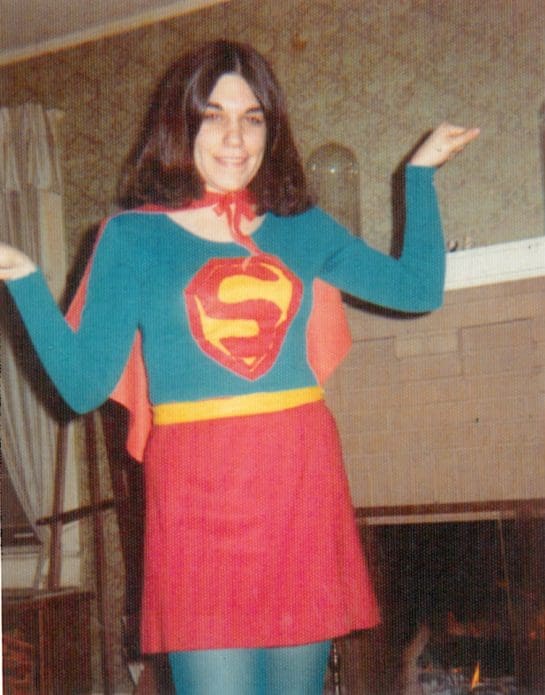
She was my Saturday morning partner. I remember waking her up early on Saturday mornings to watch cartoons in our pajamas, eating marshmallow cookies together.
She was my friend. When I was 8 years old and didn’t make the little league, she was there to soothe my bruised ego, and more importantly, to take me out to eat.
She was my confidante. When I was a teenager and gave a party, Ronni was given the chore of acting as chaperone. She never complained and never, never squealed.
She was my chauffeur on my first date, having to wait outside in the car as my date and I ate ice cream inside the local ice cream store.
Because both my parents worked, she at times was my cook, making lunch for me after school.
When my parents went on vacations, she was a surrogate parent. I remember one time when my parents were away, I decided to sleep at a friend’s house without calling to tell her. The next day when I came home, I received a scolding from her that was so loud and so extensive that to this day, I never even walk around the block without telling someone where I am going.
In school, she helped me with my homework and prepared posters when I ran for school office. She helped teach me what clothes to wear, and how to wear my hair. She taught me about girls, about music, about drugs.
Ronni was more than a child of the ‘60’s for whom political activity was merely something to do between classes. She began college at the University of Maryland, being the subject of panty raids. She ended it participating in political protests, some of which were the subject of police raids. As her mind expanded and she was made aware of certain inequalities and injustices that existed in our society, she was moved to try to change society.
She was motivated not out of a sort of intellectual curiosity that change could come about by standing on the sidelines, merely reading political theory, or by shouting slogans, and certainly not through violent means. She was not a violent person and frankly she didn’t have a mean bone in her body. It was said of my sister that when the revolution came, she would most certainly be a part of it; maybe not on the front lines, but she would be there giving support and guidance to those who needed it, and probably serving chicken soup to the injured and the ill. Ronni was moved by the simple fact that she was a good and kind human being.
Ronni knew that the only way inequality could become equality, the only way injustice could become justice was by reaching out to those who needed help or assistance, and together determining what their needs were, and working together to fill those needs. Although she was a brilliant student, my sister was not a theorist — she was a doer, someone willing to wear overalls and build solid change, brick by brick.
As I matured, I began to appreciate what a truly exquisite and talented human being Ronni was. She was an accomplished musician and artist. My home, as well as the home of our parents, are adorned with her work. In Passaic, our hometown, she had been a counselor for underprivileged children. She loved children, and believing that any lasting change must begin with education, she became a teacher in a public school in Maryland.
In the Adams Morgan section of Washington she helped create the “Music Carry-Out,” teaching music to those who could not afford it and providing a place where musicians of all types of music, from classical, to jazz, to rock, to Latin, to African could go and practice and share their joy of music, and through that sharing begin to understand that all people, like all music, share certain undeniable bonds and qualities. And I am, as she was, most proud of her work at the Institute for Policy Studies of which I know many of you are familiar.
There are many more things that I would love to say about my sister but time will not allow it. She was a wife, daughter, friend, co-worker, musician, artist, political activist, protector, cartoon watcher, cookie eater, confidante, chaperone, chauffeur, cook, teacher, and big sister. If that seems like a lot to do in 25 years of life, it is because every moment of my sister’s life was filled with the joy of living.
I hope that I have given you a bit of a look at the human being Ronni was and what she has done. And I guess that it is time for me to take a look at myself and look at the type of human being I am and ask what have I done, and what else can I do?
It has now been 10 years since Ronni’s death, and I hope I have become the type of person of whom she would be proud. I miss her now as much as I ever have. But I know that when I need her, when those around me who are bigger and stronger decide to pick a fight with me and end up on top, all I have to do is yell for Ronni and she will drop whatever it is she is doing. And in a matter of seconds, in the background will be heard her voice yelling “Supergirl,” and I know there will be no need to worry.


